



Measuring the Impact of Marketing Automation on ROI
Marketing automation has become a core part of modern demand generation. Teams rely on it to scale campaigns, personalize outreach, and manage growing volumes of leads across channels. But as automation becomes more deeply embedded in marketing operations, a familiar question continues to surface: how do you measure its real return on investment?
Marketing automation ROI is often evaluated through isolated metrics such as email engagement or lead volume. While these indicators provide surface-level insight, they rarely reflect how automation influences pipeline quality, sales alignment, or revenue outcomes. In complex B2B buying environments, the impact of automation extends well beyond individual campaigns.
To measure marketing automation ROI effectively, organizations need a broader, more strategic approach. That means connecting automation performance to business objectives, understanding its role across the full revenue funnel, and using data to inform long-term decision-making. This article explores how to evaluate the true impact of marketing automation and turn measurement into meaningful insight.
Quick Takeaways
- Measuring marketing automation ROI requires more than tracking campaign activity or engagement metrics.
- Effective ROI analysis connects automation efforts to pipeline contribution, revenue influence, and operational efficiency.
- Attribution challenges and data silos often limit visibility into automation’s full impact.
- Aligning marketing and sales around shared performance metrics improves measurement accuracy.
- ROI insights are most valuable when used to guide strategy, optimization, and long-term growth.
Why Marketing Automation ROI Is Harder to Measure Than It Seems
Marketing automation promises efficiency, scale, and improved performance across demand generation programs. Yet when teams try to quantify its return, the results often feel incomplete or inconclusive. This disconnect usually stems from how ROI is defined and measured.
Automation Works Across Time, Not Moments
Unlike a single campaign or channel, marketing automation operates continuously. Nurture programs, behavioral triggers, and scoring models influence buyer behavior over weeks or months. These touchpoints rarely produce immediate conversion events, which makes them difficult to evaluate using short-term performance metrics.
When ROI measurement focuses on isolated actions, such as email engagement or form fills, much of automation’s impact goes unaccounted for. The value often lies in progression rather than instant results.
Influence Is Distributed Across the Funnel
Another challenge is that automation rarely acts alone. It supports multiple stages of the buyer journey, working alongside content, sales outreach, and other channels. As a result, its contribution is shared rather than singular.
Traditional attribution models struggle in this environment. They tend to reward final actions instead of sustained influence, which can make automation appear less effective than it actually is.
Measurement Requires Alignment, Not Just Data
Even with robust data, ROI remains difficult to measure without alignment across teams. Marketing and sales may track different success indicators, leading to fragmented reporting and conflicting conclusions. Without shared goals and definitions, ROI measurement becomes an exercise in interpretation rather than insight.
Understanding why marketing automation ROI is harder to measure sets the stage for a more accurate, strategic approach, one that reflects how automation truly drives value.
What “Marketing Automation ROI” Really Means
To measure marketing automation ROI effectively, organizations first need a clear, shared definition. ROI in this context is not limited to direct revenue attribution. It reflects a combination of financial impact, operational efficiency, and revenue influence over time.
ROI Includes More Than Revenue Attribution
Marketing automation often supports revenue indirectly. It improves lead quality, accelerates buyer readiness, and enables more effective sales engagement. While these outcomes contribute to revenue, they may not appear as primary attribution points.
A narrow focus on attribution alone can understate automation’s value. ROI should also account for influence across the buyer journey and improvements in pipeline health.
Financial and Operational Value Both Matter
Marketing automation ROI typically spans two categories:
- Revenue-related outcomes such as pipeline contribution, conversion rates, and deal velocity
- Operational gains including reduced manual effort, improved consistency, and scalability
These dimensions work together. Operational efficiency enables teams to support larger pipelines without proportional increases in cost, which strengthens overall ROI.
ROI Is Strategic, Not Transactional
Ultimately, marketing automation ROI represents how well automation supports business objectives. It answers broader questions about growth, alignment, and sustainability rather than focusing solely on individual campaign performance.
By defining ROI in strategic terms, organizations create a stronger foundation for meaningful measurement and more informed decision-making.
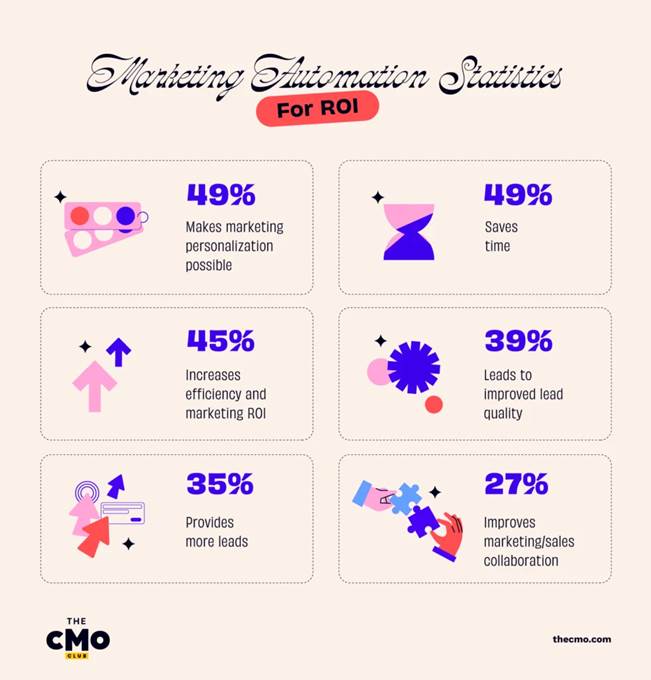
The Role of Marketing Automation Across the Buyer Journey
Marketing automation delivers its greatest value when viewed through the lens of the full buyer journey. Rather than supporting a single stage, automation helps guide prospects from early awareness through consideration, purchase, and beyond. Measuring ROI requires understanding how automation contributes at each point.
Supporting Early Engagement and Demand Creation
At the top of the funnel, marketing automation helps attract and engage potential buyers through targeted messaging and content delivery. Behavioral triggers and segmentation allow teams to tailor outreach based on interest and intent. While these interactions may not produce immediate revenue, they establish relevance and momentum that influence downstream outcomes.
Enabling Progression Through the Middle of the Funnel
In the consideration stage, automation plays a central role in nurturing. Prospects receive timely information that aligns with their behavior and needs, helping them move closer to a buying decision. This stage often reveals some of the strongest ROI signals, as improved engagement leads to higher conversion rates and better-qualified opportunities.
Strengthening Sales Alignment and Downstream Impact
Automation also supports sales teams by surfacing insights into prospect behavior, readiness, and engagement history. These insights help sales prioritize outreach and tailor conversations. Beyond conversion, automation can support onboarding and retention programs, extending its influence into customer lifetime value. When evaluated across the journey, marketing automation ROI reflects sustained impact rather than isolated performance.
Key Metrics That Signal Marketing Automation ROI
Measuring marketing automation ROI requires metrics that connect activity to business outcomes. While no single metric tells the full story, a combination of indicators provides a clearer picture of automation’s impact.
Revenue and Pipeline Metrics
These metrics help quantify automation’s influence on revenue generation:
- Lead-to-opportunity conversion rates
- Opportunity acceptance and progression rates
- Pipeline value influenced by automated programs
Improvements in these areas often signal stronger alignment between marketing efforts and revenue outcomes.
Efficiency and Cost Metrics
Automation also delivers ROI by improving operational efficiency:
- Cost per lead and cost per opportunity
- Reduction in manual campaign execution time
- Ability to manage increased volume without added headcount
These gains contribute to scalability and long-term cost control.
Velocity and Engagement Indicators
Speed and engagement provide additional context for ROI:
- Time-to-conversion and deal velocity
- Engagement trends across nurture and lifecycle programs
- Consistency of interaction across channels
When analyzed together, these metrics reveal how marketing automation supports both performance and efficiency. ROI becomes clearer when measurement focuses on patterns and progression rather than isolated activity.
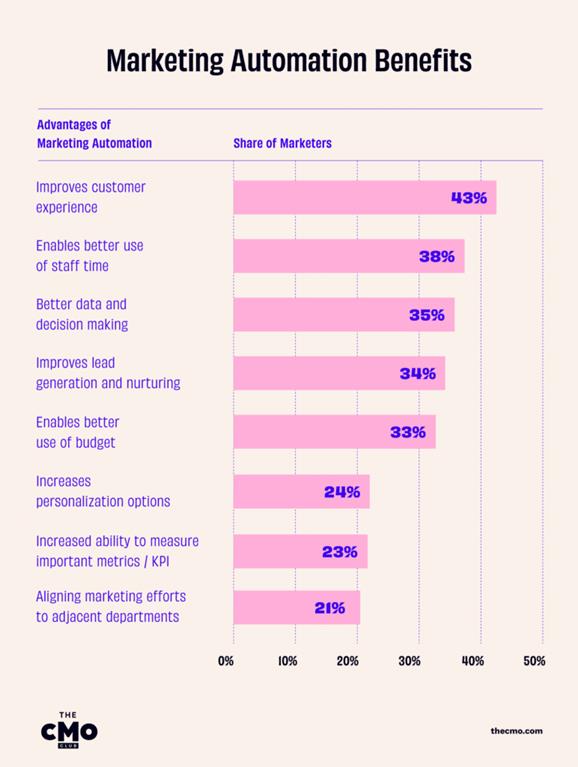
Revenue Influence vs. Attribution in Automated Programs
One of the most persistent challenges in measuring marketing automation ROI is separating revenue influence from revenue attribution. While attribution models attempt to assign credit to specific actions or touchpoints, marketing automation often operates in a supporting role that spans the entire buyer journey.
Why Attribution Alone Falls Short
In complex B2B buying cycles, prospects interact with multiple campaigns, channels, and stakeholders before a purchase decision is made. Automation may nurture interest, reinforce messaging, or surface relevant content long before a deal closes. When attribution models prioritize the final touch or a limited set of interactions, much of automation’s contribution goes unrecognized.
This limitation can lead teams to undervalue automation programs that consistently move buyers forward but rarely appear as the final conversion trigger.
Understanding Revenue Influence
Revenue influence provides a broader view of impact. Instead of asking which action closed the deal, influence-based measurement examines how automation supports buyer progression across stages. This includes engagement during early research, sustained interaction during consideration, and readiness signals passed to sales.
Influence-focused measurement aligns more closely with how automation actually works. It reflects cumulative impact rather than isolated success and provides a more realistic view of ROI.
Balancing Influence and Accountability
While influence should not replace attribution entirely, it adds necessary context. The most effective ROI frameworks balance both approaches, combining attribution models with influence analysis to capture automation’s full contribution. This balanced view helps organizations make better investment decisions and evaluate performance with greater confidence.
Common Measurement Gaps That Undermine ROI Analysis
Even organizations with mature automation platforms often struggle to measure ROI accurately. These challenges typically stem from gaps in data, alignment, or methodology rather than a lack of effort.
Fragmented Data and Limited Visibility
Disconnected systems across marketing, sales, and analytics create blind spots. When data is siloed, it becomes difficult to track how automation influences progression through the funnel. Inconsistent definitions and reporting structures further complicate analysis, leading to incomplete or misleading conclusions.
Misaligned Metrics Across Teams
Marketing and sales teams often measure success differently. Marketing may focus on engagement and lead quality, while sales prioritizes pipeline and revenue outcomes. Without shared metrics, ROI analysis lacks cohesion and credibility. Misalignment can also result in automation programs being evaluated against goals they were never designed to meet.
Short-Term Focus and Incomplete Timeframes
Marketing automation delivers value over time. Organizations that prioritize short-term results may miss long-term gains such as improved pipeline health, faster deal velocity, or increased lifetime value. Measuring ROI too early or without historical context can obscure meaningful progress.
Addressing these gaps requires intentional alignment, integrated data systems, and a willingness to evaluate performance over longer horizons. Without these foundations, even well-designed automation programs risk being undervalued.
Establishing Realistic Expectations for Marketing Automation ROI
Marketing automation ROI is often misunderstood because expectations are set too early or too narrowly. Organizations may expect immediate revenue impact from automation initiatives without accounting for the time and structure required for meaningful results to emerge.
ROI Develops Over Time
Marketing automation influences buyer behavior gradually. Nurture programs, scoring models, and behavioral triggers require sufficient data and iteration before they perform at full potential. Early-stage measurement may reflect learning curves rather than true performance, which makes patience a necessary component of accurate ROI evaluation.
Expecting automation to deliver immediate revenue gains can lead to premature conclusions and missed opportunities for optimization.
Maturity Impacts Measurement Quality
The accuracy of marketing automation ROI improves as programs mature. As data quality increases and workflows are refined, measurement becomes more reliable. Organizations with newer automation programs may see uneven results initially, while more established programs benefit from historical context and clearer performance benchmarks.
Recognizing where automation sits on the maturity curve helps teams interpret results more effectively.
Setting ROI Expectations That Support Strategy
Realistic ROI expectations focus on progression, efficiency, and scalability rather than short-term wins. Automation should be evaluated based on its ability to support long-term revenue growth, improve alignment, and enable consistent execution at scale.
When expectations align with how automation actually delivers value, ROI measurement becomes more constructive. Instead of asking whether automation worked, teams can focus on how it can work better.
Aligning Marketing and Sales Around Automation Performance
Marketing automation ROI becomes far more measurable when marketing and sales operate from a shared performance framework. Without alignment, even strong automation programs can appear ineffective because success is evaluated through disconnected lenses.
Establishing Shared Definitions of Success
Alignment starts with agreement on what constitutes a qualified lead, a meaningful interaction, and a successful outcome. When marketing automation feeds leads into the sales pipeline, both teams need clarity on expectations. This includes defining readiness signals, engagement thresholds, and progression criteria.
Shared definitions reduce friction and create consistency in how automation-driven activity is evaluated. They also help ensure that ROI measurement reflects outcomes both teams recognize as valuable.
Using Automation to Support Sales Effectiveness
Marketing automation can strengthen sales performance by providing visibility into buyer behavior. Engagement history, content interaction, and intent signals help sales teams prioritize outreach and tailor conversations. Measuring how these insights affect opportunity progression and win rates helps connect automation efforts to revenue impact.
Creating Feedback Loops for Continuous Improvement
Alignment improves when feedback flows in both directions. Sales input helps marketing refine automation logic, messaging, and scoring models. In turn, marketing data supports sales strategy and forecasting. These feedback loops turn ROI measurement into a collaborative process rather than a point of contention.
When marketing and sales evaluate automation performance together, ROI becomes more actionable and more accurate.
Improving Measurement Accuracy Over Time
Accurate measurement of marketing automation ROI is not a one-time exercise. It requires ongoing refinement as strategies evolve, data improves, and buyer behavior changes.
Establishing Baselines and Benchmarks
Measurement accuracy improves when teams establish clear baselines before automation programs scale. Comparing performance against historical benchmarks provides context and helps distinguish meaningful improvement from normal variation. Benchmarks also support more confident decision-making as programs mature.
Integrating Data Across Systems
Reliable ROI analysis depends on connected data. Integrating marketing automation platforms with CRM, analytics, and reporting tools reduces blind spots and ensures consistent tracking across the buyer journey. This integration supports clearer attribution, stronger influence analysis, and more reliable reporting.
Treating Measurement as an Ongoing Process
As automation capabilities expand, measurement frameworks should evolve alongside them. Regular performance reviews allow teams to adjust metrics, refine models, and respond to new insights. Over time, this iterative approach strengthens accuracy and ensures ROI measurement remains aligned with business objectives.
Improving measurement accuracy enables organizations to move beyond reactive reporting and toward strategic optimization.
Turning Automation Insights Into Revenue Strategy
Measuring marketing automation ROI creates value only when insights translate into action. Data should inform decisions about where to invest, what to refine, and how to scale programs that support revenue growth.
Using ROI Insights to Guide Priorities
Performance data highlights which automation efforts contribute most to pipeline quality and progression. These insights allow teams to double down on high-performing programs while adjusting or retiring initiatives that deliver limited impact. ROI measurement becomes a practical tool for prioritization rather than a retrospective report.
Refining Strategy Through Continuous Learning
Automation insights also reveal patterns in buyer behavior. Engagement trends, conversion timing, and content performance provide signals that help teams refine messaging, sequencing, and targeting. Over time, this feedback loop strengthens demand generation strategy and improves alignment with sales outcomes.
Building a Revenue-Centered Measurement Culture
When automation insights consistently inform planning and optimization, organizations move toward a revenue-centered approach to measurement. Marketing automation ROI becomes a strategic input that supports forecasting, resource allocation, and long-term growth decisions. This shift positions automation as a driver of revenue strategy rather than a standalone marketing function.
Strengthen Revenue Performance Today with Televerde
Marketing automation ROI is most valuable when it connects measurement to meaningful business outcomes. By evaluating automation through the full buyer journey, aligning teams around shared metrics, and using insights to guide strategy, organizations can better understand how automation supports sustainable revenue growth.
Televerde helps organizations turn marketing and sales data into actionable insight. Through integrated demand generation strategies and revenue-focused measurement, Televerde supports teams looking to improve performance, alignment, and long-term growth.
Discover how Televerde’s inside solutions help organizations expand reach, improve efficiency, and accelerate revenue. Contact us to learn more.