



ROI Calculator: Outsourcing vs In-House Sales Teams
Organizations evaluating sales outsourcing often begin with the same question: What is the return on investment compared to hiring an in-house team? A reliable ROI comparison requires more than tallying salaries or hourly rates. Sales performance is shaped by ramp time, conversion efficiency, management overhead, technology investments, and the organization’s ability to maintain consistent pipeline coverage. An accurate evaluation must consider both direct expenses and operational realities.
An ROI calculator for sales outsourcing versus in-house teams should help organizations understand the cost of achieving predictable performance, not just the cost of headcount. When viewed through this lens, leaders gain a clearer picture of where outsourcing supports growth, when in-house investment offers greater control, and how each option affects long-term revenue outcomes.
Quick Takeaways
- ROI calculations for sales outsourcing must include direct and indirect costs that influence performance, predictability, and growth.
- In-house teams provide control and cultural alignment, while outsourcing offers rapid scalability and reduced ramp time.
- The most accurate ROI models evaluate cost-per-meeting, conversion efficiency, tech stack requirements, and management overhead.
- Outsourcing may deliver stronger ROI when organizations need immediate coverage or lack SDR infrastructure.
- A balanced evaluation helps leaders select the structure that aligns with strategic goals and resource constraints.
Understanding the True Cost of an In-House Sales Team
An in-house sales development team requires significant upfront and ongoing investment. Salaries are only one part of the equation. Leaders must also factor in recruiting, onboarding, training, technology, benefits, and management resources.
A typical in-house SDR cost model includes:
- Base salary and variable compensation
- Benefits and payroll expenses
- Recruiting fees and hiring time
- Sales tools: CRM licenses, sequencing platforms, data providers, enablement tools
- Training and continued coaching
- Productivity loss during ramp periods
- Leadership oversight and performance management
These expenses extend beyond the SDR role. As teams grow, organizations often need additional layers of operations, analytics, quality assurance, and technology support.
The value of an in-house team is control: full visibility into workflows, cultural alignment, and direct management. But the cost structure is heavier, and ROI depends on the organization’s ability to hire efficiently, ramp quickly, and maintain consistent performance across the funnel.
How to Calculate ROI for an In-House Team
An accurate ROI calculation begins with determining the cost per fully ramped SDR. This includes salary, technology, and management overhead spread across the number of qualified meetings or opportunities generated per month.
A simplified in-house ROI equation might look like:
ROI = (Pipeline Generated – Cost of Team) / Cost of Team
However, pipeline generated is directly influenced by:
- The SDR’s productivity during ramp
- Lead quality
- Capacity lost during turnover
- The team’s ability to maintain consistent outreach volume
- Operational support from RevOps, sales enablement, and marketing
For this reason, in-house ROI is highly sensitive to changes in performance. When teams hit quota consistently, the model works well. When turnover or slow ramp periods impact productivity, ROI drops quickly.
Understanding the Cost Structure of Outsourced Sales Teams
Sales outsourcing shifts many of the internal cost burdens to an external partner. Instead of recruiting and managing SDRs, organizations pay a predictable monthly or quarterly fee that covers:
- Trained SDR talent
- Leadership and quality assurance
- Technology stack and data tools
- Reporting and analytics
- Coaching and development
- Ramp time before go-live
- Performance consistency
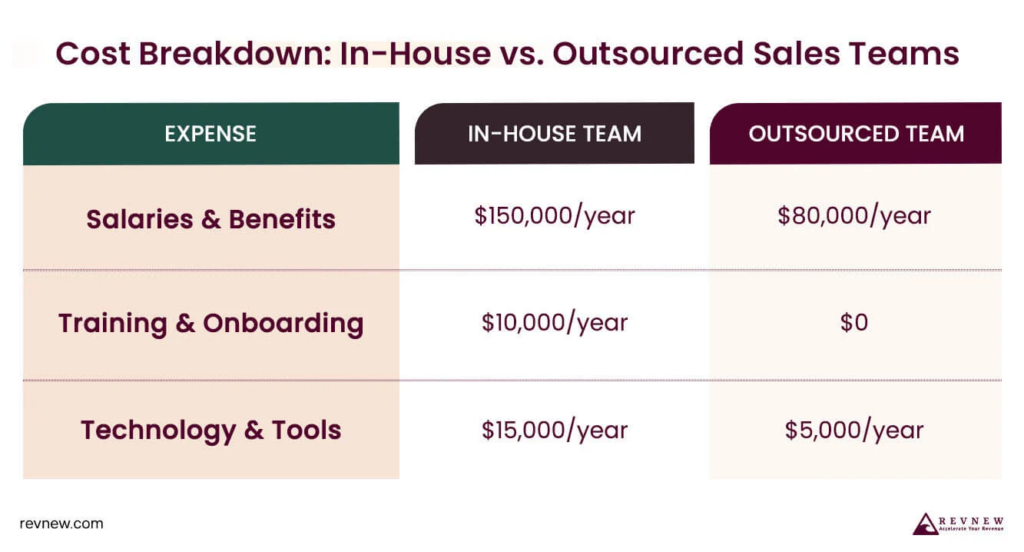
This structure reduces the financial volatility associated with hiring and managing an internal team. Organizations benefit from immediate access to trained resources, established processes, and standardized outreach methodologies.
Outsourcing does not eliminate all internal responsibilities. Sales and marketing must remain aligned with the external team, maintain ICP clarity, and ensure seamless handoff workflows. But outsourcing removes much of the operational burden that reduces productivity and increases cost.
How to Calculate ROI for Sales Outsourcing
ROI for outsourcing requires a similar formula but includes more predictable inputs:
ROI = (Pipeline Generated – Cost of Outsourced Program) / Cost of Outsourced Program
The value of outsourcing comes from:
- Faster ramp times
- Immediate access to experienced SDR talent
- Consistent outreach volume
- Reduced internal management workload
- Better utilization of inbound leads
- Rapid scalability when new coverage is needed
Organizations also gain access to tools and methodologies without purchasing additional platforms. When comparing ROI to in-house teams, outsourcing often appears more cost-effective when time-to-value and capacity coverage are factored in.
Key Inputs for a Balanced ROI Calculator
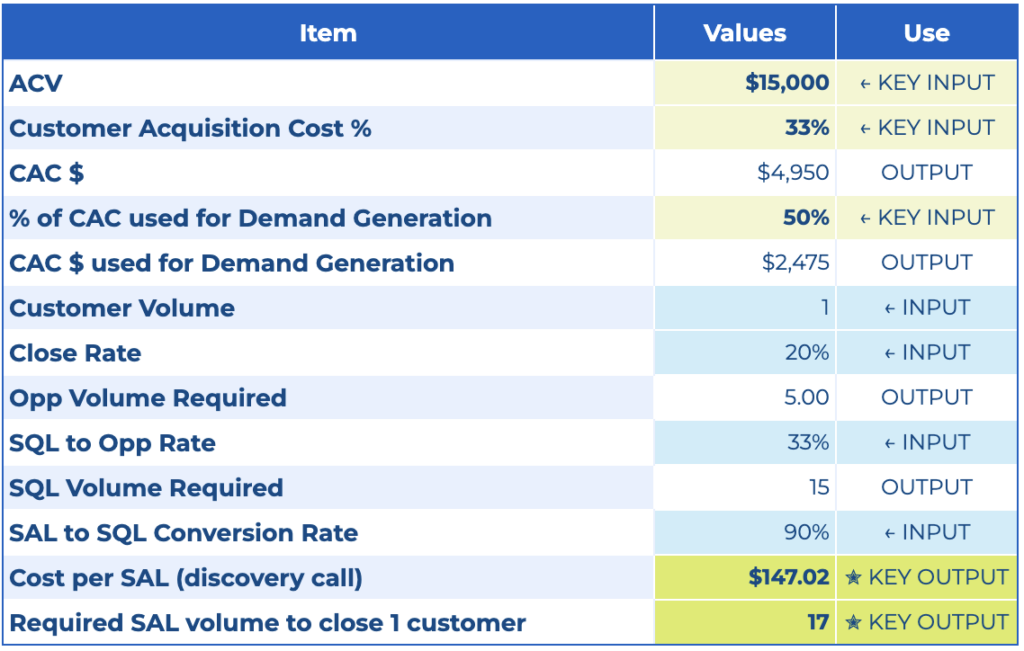
A meaningful sales outsourcing ROI calculator should include both cost and performance variables. The most common inputs include:
1. Cost Per Meeting (CPM)
CPM shows the true cost of generating qualified meetings, factoring in all expenses—not just direct compensation or program fees.
2. Conversion Rates
Pipeline impact depends on whether meetings convert into opportunities. Consistent conversion reduces variability in ROI calculations.
3. Ramp Time
Outsourced teams often reach productivity within weeks. In-house teams may require months. Shorter ramp periods raise ROI by accelerating results.
4. Management and Operational Overhead
Internal teams require ongoing oversight and support. Outsourcing reduces the hours and cost associated with these tasks.
5. Technology Requirements
Outsourcing bundles technology costs into the program fee. In-house teams typically require multiple licenses across data, sequencing, and CRM tools.
6. Funnel Efficiency
The quality and volume of outreach influence opportunity creation. Efficient funnels deliver higher ROI, regardless of team structure.
When Outsourcing Delivers Higher ROI
Outsourcing tends to deliver stronger ROI when organizations need immediate pipeline coverage or lack the internal infrastructure to support an SDR function. It is especially effective for lean sales teams, companies experiencing high turnover, or organizations struggling to maintain consistent outreach volume.
Outsourcing teams ramp quickly, stabilize follow-up on inbound leads, and provide reliable coverage for project-based or temporary initiatives. By reducing operational overhead and accelerating productivity, outsourcing often produces faster results and a lower overall cost per meeting.
When In-House Teams Deliver Higher ROI
An in-house team may be more cost-effective when organizations have strong training programs, mature enablement support, and a stable SDR workforce. In-house structures also benefit companies that require deep product knowledge, industry specialization, or tight cultural alignment.
When internal teams operate efficiently and maintain consistent performance, the added control and institutional expertise can outweigh the operational efficiencies of outsourcing. In these situations, an in-house approach may offer a stronger long-term ROI.
Choosing the Right ROI Model for Your Organization
The most accurate ROI model reflects your organization’s structure, goals, and operational maturity. Leaders should evaluate:
- Cost of internal hiring and retention
- SDR productivity expectations
- Current conversion rates
- Ramp time constraints
- Technology requirements
- Pipeline coverage needs
- Executive expectations for time-to-impact
An ROI calculator is only useful when informed by realistic assumptions and aligned with broader sales strategy. Leaders should analyze the total cost of generating predictable early-funnel activity, not just the cost of talent.
Strengthen ROI Visibility Today with Televerde
A clear ROI comparison between outsourcing and in-house teams helps leaders make informed decisions about resources, coverage, and operational efficiency. When organizations understand the full cost and performance impact of each model, they can select the structure that supports predictable growth and long-term revenue stability.
Connect with Televerde to evaluate sales outsourcing ROI models that align with your goals and build a more efficient path to pipeline creation.